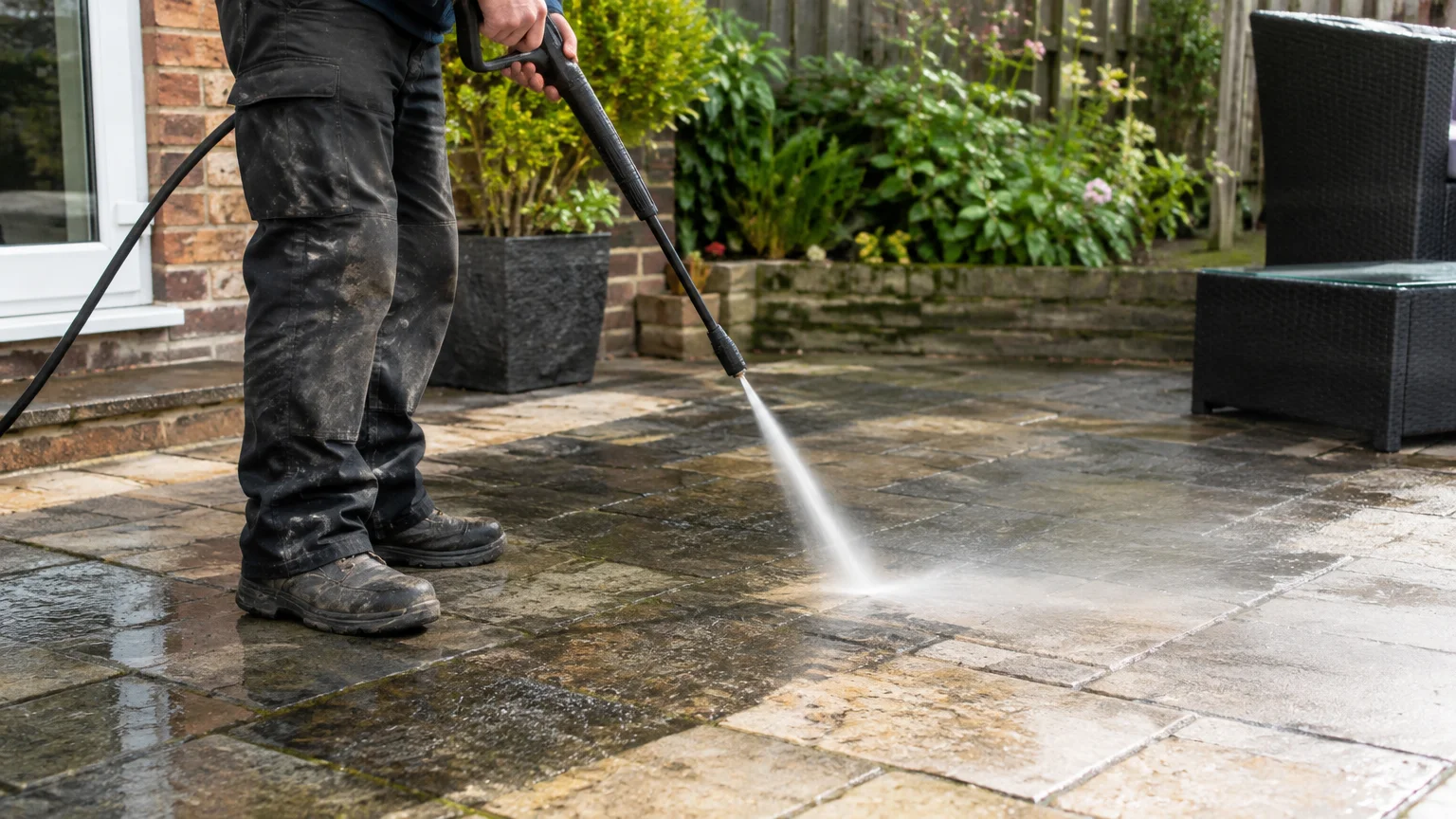
A pressure washing scope of work explains what will be cleaned, how it will be cleaned, and what results to expect. The pressure washing scope of work may change with surface type, property size, access, stains, safety needs, and cleanup. A clear scope helps North Lake property owners compare quotes with confidence.
Table of Contents
- What does a pressure washing scope of work include?
- Which property factors change the scope of pressure washing?
- How do preparation and protection affect the job scope?
- What is the difference between pressure washing and soft washing?
- How does the scope change for common pressure washing projects?
- How can you compare two pressure washing quotes accurately?
- How should you confirm the scope before scheduling pressure washing?
What does a pressure washing scope of work include?
A pressure washing scope of work should list each area, surface, cleaning method, and expected result. It should also cover preparation, protection, cleanup, and work that is not included. This gives homeowners, tenants, and property managers a clear view of the quote.
Areas, surfaces, and services covered
The scope should name the exact areas to be cleaned. These may include a driveway, front walk, patio, pool deck, fence, siding, roof, storefront, loading area, or parking lot. It should say if the whole surface is included or only certain sections.
A good scope also names the surface material. Concrete, brick, wood, composite decking, vinyl siding, stucco, asphalt, and roofing materials need different care. A request for patio cleaning may not include nearby steps, walls, furniture, or pool coping unless those items appear in the written scope.
The scope may include related services, such as Concrete Cleaning Services, Deck Cleaning Services, Building Washing Services, or commercial pressure washing. Each service should state its limits. Cleaning may remove dirt and mildew, but it does not repair cracks, replace boards, or remove every old oil mark.
Cleaning standards and expected results
The scope should explain the expected result in plain words. It may state that loose dirt, algae, mildew, and surface grime will be removed. It should not promise that every stain, faded spot, or old coating will disappear.
The final look depends on the surface and the buildup. Older concrete may still show marks after washing. Wood may keep changes in its natural color. A clear scope sets a fair standard and helps prevent confusion after the work.
Which property factors change the scope of pressure washing?
Property size, surface type, access, and buildup all change the work plan. A small front walk may need a simple setup. A large business site may need traffic control, added protection, and more than one cleaning method. The same service name can describe very different jobs.
Surface type, size, and accessibility
Concrete often handles more pressure than painted wood or vinyl siding. Brick needs care around mortar joints. Roofs usually need a gentler method than driveways. The material guides water pressure, nozzle choice, cleaning solution, and work speed.
Size matters as well. A narrow walkway and a long driveway do not need the same setup. A large building may need lifts, long hoses, more workers, or a plan to keep customers away from wet areas. Tight gates, steep slopes, locked spaces, and limited water access can add steps.
Access should appear in the written scope. A contractor may need to move hoses across a side yard or reach an upper wall from a safe work area. If a roof, rear patio, or fenced section is hard to reach, the quote should explain the planned method.
Soil, stains, buildup, and surface condition
Dirt is only one kind of buildup. Algae, mildew, moss, rust, grease, tire marks, bird waste, and old sealers may need different treatment. Some stains sit on top of the surface. Others soak into porous material or change its color.
Surface condition matters too. Loose paint, cracked concrete, soft wood, weak mortar, and damaged siding can change what is safe. Cleaning may reveal damage hidden by grime. A careful scope should note visible concerns and explain when repairs are outside the cleaning service.
Northlake Pressure Washing helps North Lake property owners decide which areas belong in one project. A site review, clear photos, or useful measurements can make the scope more accurate. These steps do not promise a perfect final result, but they help prevent scope changes later.
How do preparation and protection affect the job scope?
Preparation and protection are part of the cleaning plan. They are not small details. The scope should explain what the owner must move or secure and what the cleaning team will protect. This can change the time, equipment, and steps needed on site.
What homeowners and property managers may need to move or secure
Outdoor furniture, planters, toys, mats, tools, vehicles, and loose decorations may need to move before cleaning. Gates should be unlocked, pets should stay indoors, and paths should remain clear. Businesses may need to move displays, close a doorway for a short time, or guide people around wet areas.
The written scope should say who handles these tasks. It should also explain what happens when an item cannot move. Heavy equipment, fragile decorations, and attached signs may need special protection. Some items may stay outside the cleaning area.
For driveway washing prep, owners should move vehicles and loose items before the crew arrives. This simple step gives the team better access. It also helps keep water and cleaning products away from items that do not belong in the work area.
Landscaping, windows, doors, and runoff considerations
Plants and garden beds should be covered or rinsed as needed. Windows and doors should stay closed during the work. Outdoor outlets, lights, speakers, vents, and delicate finishes may need protection from water and cleaning solutions.
Runoff is another key detail. Dirty water and cleaning products should be managed so they do not enter unwanted areas. The plan may direct water away from doors, control overspray, and rinse nearby surfaces after cleaning. Local rules may affect runoff at business sites, so property managers should ask what steps are included.
Preparation also supports safer work. The crew should look for slip risks, overhead lines, fragile surfaces, and areas used by guests or customers. A complete scope explains these controls in simple words instead of leaving them unstated.
What is the difference between pressure washing and soft washing?
Pressure washing uses pressurized water to clean a surface. Soft washing uses lower pressure, a cleaning solution, and controlled rinsing. The safer method depends on the material, buildup, height, and surface condition. Good cleaning is not based on pressure alone.
When higher pressure may be appropriate
Higher pressure may suit strong surfaces such as sound concrete, some masonry, and certain uncoated areas. A surface cleaner can help wash broad concrete areas with an even pattern. The operator must still watch for cracks, weak edges, and damaged joints.
More pressure does not always mean better cleaning. Too much force can mark concrete, remove joint sand, damage paint, splinter wood, or push water behind siding. The scope should name the general method and explain its limits.
When lower pressure and cleaning solutions are safer
Soft washing is often safer for siding, roofs, painted surfaces, delicate masonry, and areas with organic growth. The solution helps loosen algae, mildew, and grime. Low-pressure rinsing then reduces the risk of surface damage. The solution and rinse plan should match the material and site.
For vinyl siding, the question is not only what PSI pressure washer to use. PSI means pounds per square inch, or water force. The better question is which method protects the siding, windows, plants, and wall system. Roof cleaning also needs care because walking and strong spray can damage roofing materials.
The scope should state whether pressure washing, soft washing, hand cleaning, or a mixed method will be used. It should also say who decides if the method must change after the surface is checked.
How does the scope change for common pressure washing projects?
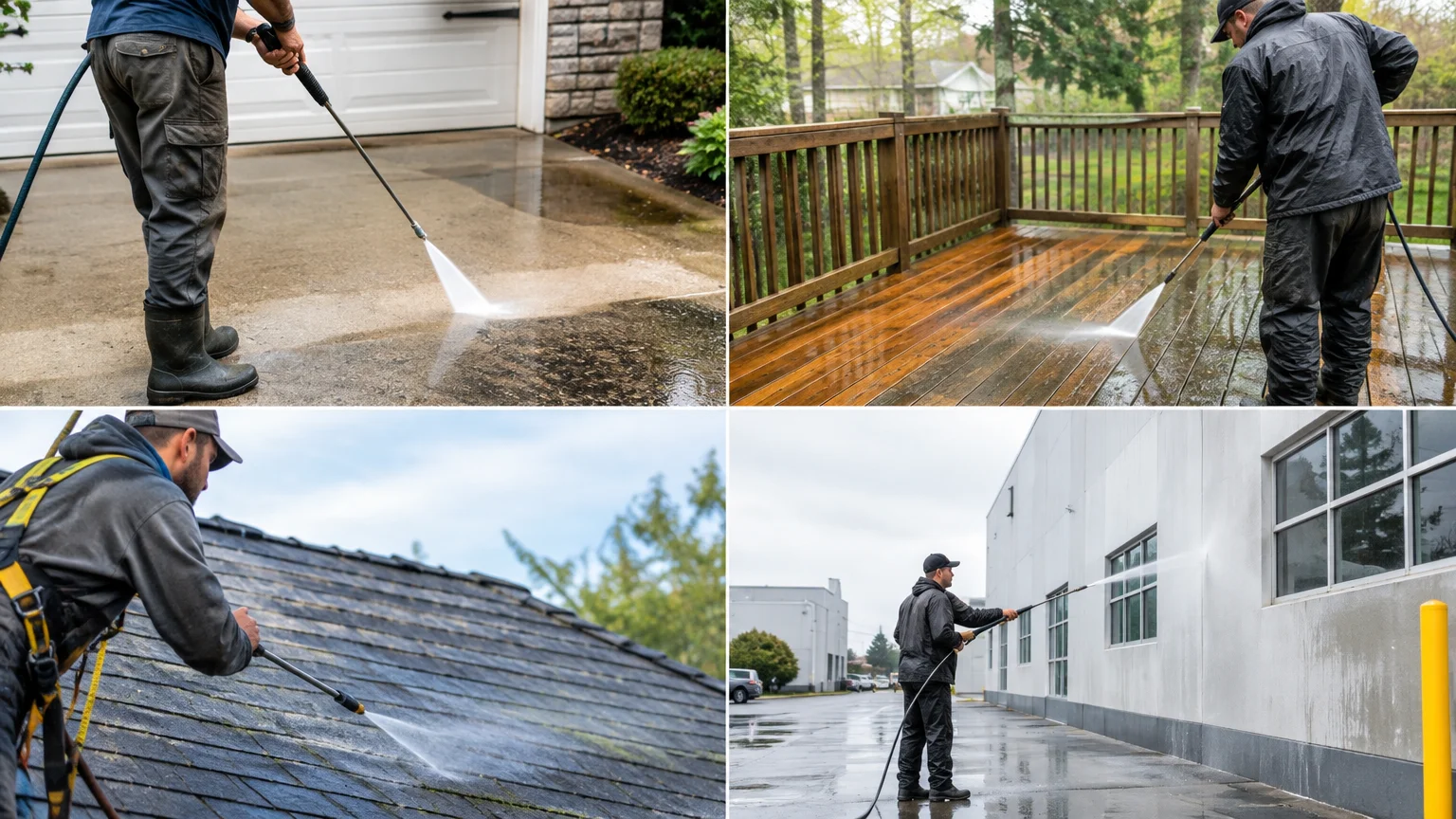
The scope changes because each project has different surfaces, risks, and results. A driveway, deck, roof, and commercial building should not have the same short description. Each needs its own cleaning area, method, protection plan, and limits.
Driveways, sidewalks, patios, and decks
Driveways and sidewalks often need loose dirt, algae, tire marks, and surface grime removed. The scope should say if edges, steps, curbs, and nearby walls are included. It should also explain how vehicles will stay away while surfaces dry.
Patio cleaning may cover concrete, brick, pavers, or tile. Furniture, grills, planters, and outdoor rugs may need to move. Joint sand, sealers, and delicate edging can change the cleaning method.
Deck cleaning needs a careful plan for wood or composite boards. The scope should address railings, stairs, reachable undersides, and board condition. A homeowner may sweep a deck and rinse light dirt safely. Deep mildew, high areas, and damaged boards call for professional judgment. Staining or sealing is separate unless it appears in the written scope.
Siding, roofs, commercial buildings, and parking areas
Siding work should identify the wall sections, trim, soffits, gutters, and screens included. Roof cleaning should identify the roof areas and explain how plants, windows, and rainwater paths will be protected. A scope should never treat roof cleaning like driveway cleaning.
Commercial work may include storefronts, sidewalks, awnings, loading areas, parking lots, and building walls. The plan may need work hours, access control, warning signs, and tenant coordination. A hotel or busy site may need cleaning planned around guests and deliveries. House washing needs its own plan based on traffic, weather, shade, and surface growth.
How can you compare two pressure washing quotes accurately?
Two quotes are comparable only when they describe similar work. One may cover a whole building, while another covers only the front wall. The best comparison looks at areas, methods, preparation, protection, cleanup, and exclusions before the final quote amount.
Questions to ask about included and excluded work
Ask each provider the same questions:
- Which exact surfaces and sections are included?
- Which cleaning method will be used for each material?
- Are stains, mildew, oil marks, or old coatings treated differently?
- Who moves furniture, vehicles, planters, and outdoor items?
- How are windows, doors, plants, lights, and nearby finishes protected?
- Is cleanup included, and where will runoff go?
- What stain or surface limits should the owner understand?
The answers should appear in writing. Verbal promises can be forgotten, especially when several areas or buildings are involved. A clear quote also makes it easier to request one change without changing the whole project.
How to compare methods, preparation, protection, and cleanup
A lower quote may describe fewer areas, less preparation, or a different cleaning method. A higher quote may include hard access, more protection, special equipment, or detailed cleanup. Neither is automatically the better choice.
Compare the full scope line by line. Look for the same areas, stain treatment, access plan, and cleanup standard. Ask why the methods differ when one provider suggests pressure washing and another suggests soft washing.
Northlake Pressure Washing can discuss the work with homeowners, property managers, and business owners in the main North Lake area. This includes North Lake, Pine Lake, Hartland, Merton, Chenequa, Delafield, and nearby communities. The goal is to explain what will happen, what may remain, and what must be handled separately.
How should you confirm the scope before scheduling pressure washing?
Before scheduling, confirm the work in writing. The final scope should list the property, areas, surfaces, method, preparation, protection, cleanup, and expected result. It should also state exclusions and explain how changes will be handled.
Details to document in writing
A useful confirmation includes the service date, access instructions, water access, parking needs, and on-site contact. It should name fragile items, known damage, locked gates, tenant concerns, and areas that must remain untouched.
Review photos or marked areas when the property is large. This can prevent confusion about rear walls, side gates, roof sections, pool areas, or loading zones. Confirm every change before work begins.
The scope should also state that cleaning cannot guarantee a like-new surface. Some stains may remain, and hidden damage may appear after dirt is removed. This is a normal limit of cleaning work, not a reason to leave details unclear.
Key takeaways for choosing a complete and comparable quote
- A strong scope names every area and surface included.
- The cleaning method should match the material and surface condition.
- Preparation, plant protection, runoff control, and cleanup should be clear.
- Quotes should be compared by the work included, not by a short label.
- The final cost is confirmed in the written quote after the scope is reviewed.
Frequently Asked Questions
What should be included in a pressure washing quote?
A quote should identify the property areas, surface materials, cleaning method, preparation, protection, cleanup, and exclusions. It should explain expected results and note deep stains, damaged surfaces, or limited access. A clear pressure washing scope of work gives both sides the same plan before scheduling.
What PSI pressure washer is safe for vinyl siding?
There is no single safe setting for every home. The right choice depends on siding condition, height, buildup, nozzle distance, and water control. Many siding projects suit soft washing or low-pressure rinsing better. Homeowners should avoid strong spray near seams, vents, windows, and trim.
How often should a house exterior be washed?
A home may need cleaning when dirt, algae, mildew, or stains become visible. The timing varies with shade, moisture, trees, weather, surface type, and nearby traffic. Regular checks help catch buildup early. A professional can suggest a plan after reviewing the surfaces and local conditions in North Lake.
Is pressure washing safe for a roof?
Strong pressure can damage some roofing materials, remove protective granules, or push water into unwanted areas. Roof cleaning often needs lower pressure and a controlled cleaning solution. The provider should inspect the roof, explain the method, protect nearby surfaces, and note damage before starting.
Can homeowners pressure wash a deck themselves?
A homeowner can sweep a deck, remove light debris, and rinse carefully when the surface is sound and easy to reach. Professional help is safer for high decks, heavy growth, weak boards, difficult stains, or unclear equipment settings. The method should protect wood fibers, fasteners, railings, walls, and plants.
Conclusion
A complete pressure washing scope of work makes the job easier to understand and quotes easier to compare. It should cover the exact surfaces, cleaning methods, preparation, protection, cleanup, expected results, and limits. Northlake Pressure Washing helps property owners in North Lake review these details before work begins. Contact us today to discuss the scope and schedule the right pressure washing service.