Window screen cleaning is safest when you remove screens carefully, brush them with mild soap, rinse them gently, and let them dry fully. Use soft tools to protect mesh, seals, and frames. Avoid high pressure, harsh cleaners, and rough scrubbing, which can stretch mesh or damage its coating.
A clean screen lets fresh air enter with less dust, pollen, and outdoor debris. Clean tracks also help windows slide with less strain. These simple steps can help homes, rentals, storefronts, and offices in North Lake look cleaner and stay easier to maintain.
Table of Contents
- What Is the Safest Way to Clean Window Screens?
- How Do You Clean Window Screens Without Damaging the Mesh?
- Can You Wash Window Screens With a Pressure Washer?
- How Should You Clean Window Tracks and Sills?
- How Often Should Window Screens and Tracks Be Cleaned?
- What Mistakes Can Damage Window Screens During Cleaning?
- Should Window Screen Cleaning Be Combined With Window Washing?
- Frequently Asked Questions
What Is the Safest Way to Clean Window Screens?
The safest method is to remove each screen and place it on a clean, flat surface. Use a soft brush with mild soapy water. This keeps dirty water away from the glass and lets you reach both sides. It also helps you find loose mesh, bent corners, and broken seals.
Screens may feel light, but their frames can bend easily. Before removing one, check how it fits into the window. Many screens use small tabs, springs, or latches. Release these parts gently instead of pulling on the mesh.
How to remove screens without bending the frame
Open the window enough to reach the screen safely. Look for tabs near the sides or bottom. Hold the frame with both hands, release the tabs, and tilt the screen as its design allows. If it feels stuck, stop rather than forcing it.
Place the screen on a towel, clean drop cloth, or smooth work surface. Grass, gravel, and rough concrete can catch the mesh. A quick photo before removal can help you put the screen back in the right position.
Which tools and cleaning solutions are safe for mesh?
Useful tools include a soft nylon brush, a vacuum with a brush attachment, a bucket, mild dish soap, clean water, and soft towels. A low-pressure garden hose can rinse away loose soap. Move the brush lightly across the mesh instead of pressing into it.
Avoid bleach, solvent cleaners, abrasive powders, and stiff wire brushes. These products can harm mesh, coatings, and frame finishes. Test a small area first if the screen is old or made from an unknown material. Northlake Pressure Washing can help North Lake property owners choose a safe method for each screen and frame.
How Do You Clean Window Screens Without Damaging the Mesh?
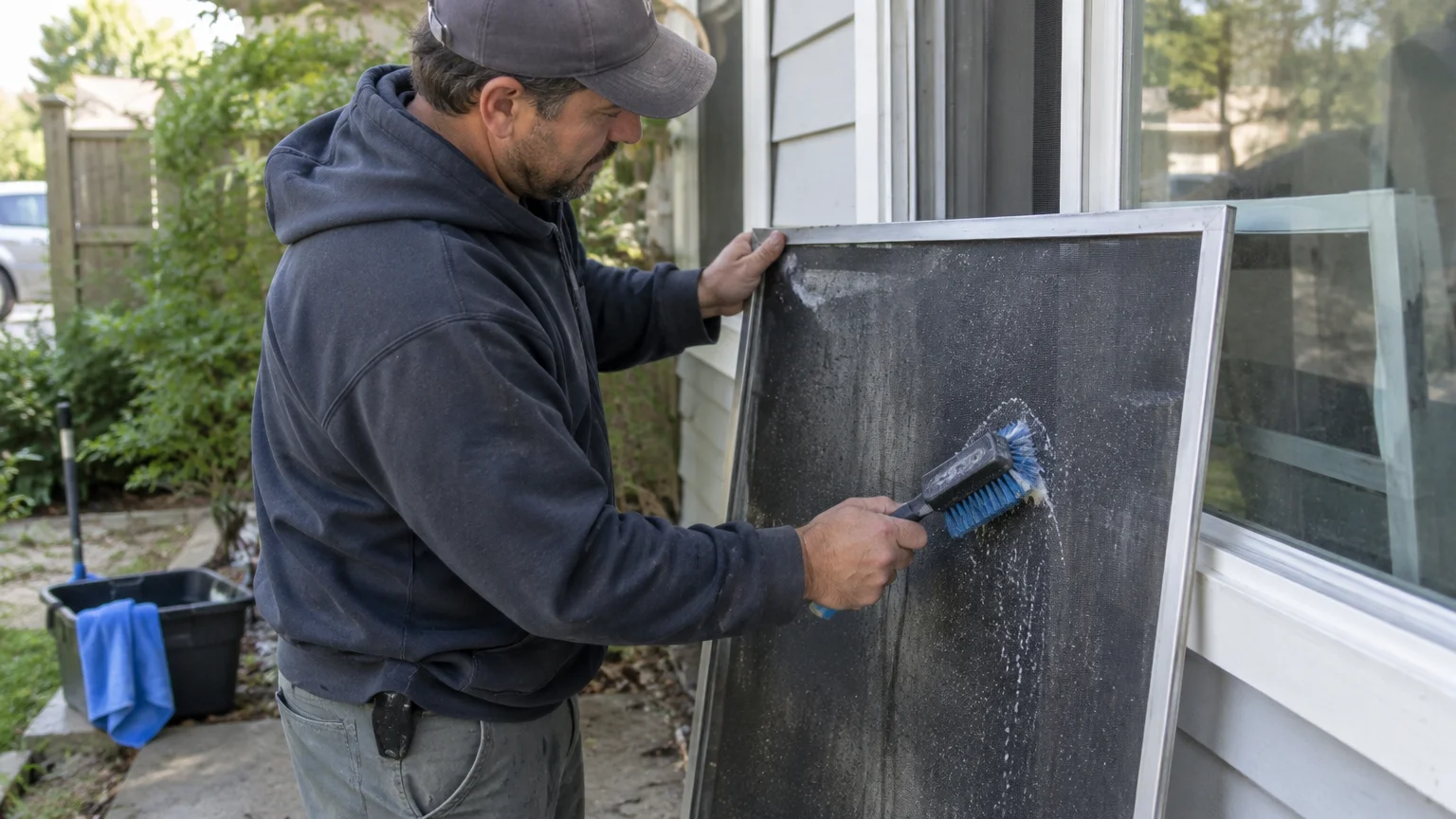
Gentle window screen cleaning starts with dry dust removal. It ends with a full rinse and careful drying. Remove dry dirt before adding water. Otherwise, dust can turn into paste and spread across the mesh and frame.
This method works for many aluminum, fiberglass, and coated screens. Still, check each screen before cleaning. Brittle mesh, loose corners, and deep tears may need repair or replacement instead of heavy washing.
A gentle step-by-step screen cleaning method
- Inspect the screen. Look for tears, loose spline, bent corners, and weak frame joints.
- Remove dry dust. Use a soft vacuum brush or hand brush on both sides.
- Mix mild soap and water. Keep the mix light so it rinses away well.
- Brush with little pressure. Work in small sections from top to bottom.
- Rinse both sides. Use a gentle stream that will not push into the mesh.
- Dry before reinstalling. Stand the screen upright or lay it on a clean towel.
The spline is the narrow cord that holds the mesh inside the frame. It can loosen when a brush catches its edge. Keep the brush near the frame and avoid digging into the corners.
How to rinse, dry, and inspect screens
Rinse until no soap remains. Leftover cleaner can attract dust and leave a dull film. Do not use a tight, strong stream because it may stretch older mesh.
Let the screen air-dry in a clean, shaded place. Direct hot sun can make some materials warm and flexible. Before installation, check for missed pollen, trapped dirt, and loose spline. The frame should sit squarely without pressure.
Seasonal pollen and dry dust can collect quickly in North Lake. Careful service from Northlake Pressure Washing can help protect screen parts while keeping the work neat.
Can You Wash Window Screens With a Pressure Washer?
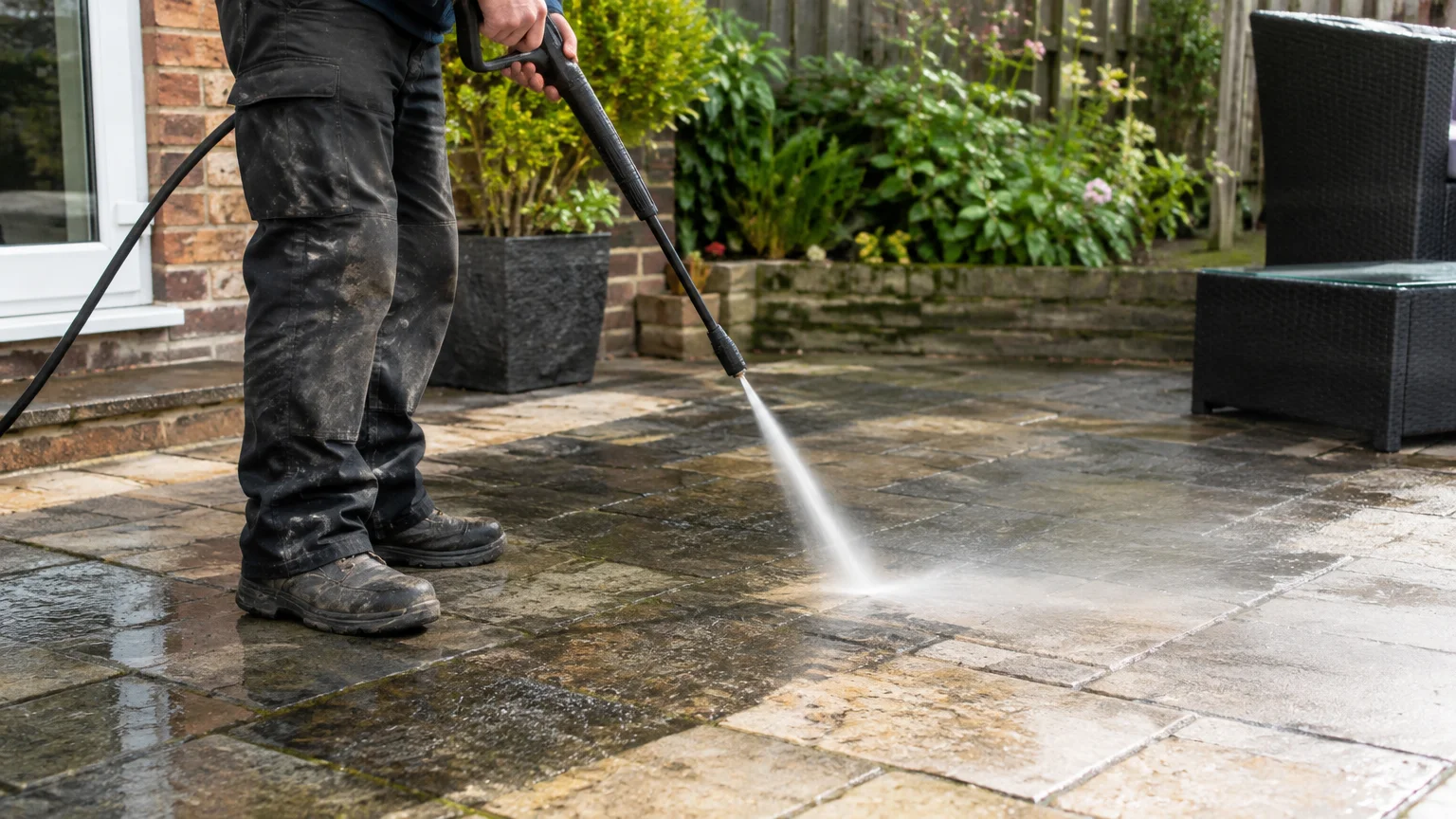
Most window screens should not be cleaned with a standard pressure washer. A narrow spray can stretch mesh, push it from the frame, or tear weak spots. It can also drive water into tracks, seals, and nearby wall materials.
Pressure washing has a place on strong outdoor surfaces, but screens need a softer method. Risk depends on distance, spray angle, nozzle type, and water pressure. Even a small-looking spray can damage an older screen.
Why high pressure can stretch or tear screen mesh
Mesh works because many thin strands cross and support each other. A focused spray can move those strands out of shape. Old fiberglass screens may become brittle. Aluminum mesh may crease or bend.
The frame can suffer too. Water may enter corners, push out spline, or loosen a frame joint. If the screen stays installed, spray can carry dirt into the track. That can make the window harder to open and close.
High pressure is also a poor choice for delicate trim and glass. A safer plan is to remove the screen and clean it away from the window. For strong exterior surfaces, a trained worker may choose soft washing or controlled low-pressure rinsing instead.
When soft-brush or low-pressure washing is more appropriate
A soft brush works well for dust, pollen, and light grime. A gentle hose rinse can remove soap after brushing. For commercial work, a pure-water rinse may help reduce spots on nearby glass. Pure water has minerals removed, so it leaves fewer marks as it dries.
Homeowners do not need a professional for simple, ground-level cleaning when screens are easy to remove and in good shape. Professional help is useful when screens are high, fragile, hard to reach, or part of a large property. The same care applies to storefronts, rentals, and shared buildings.
How Should You Clean Window Tracks and Sills?
Clean tracks and sills by removing loose debris first. Then wipe the remaining soil with controlled moisture. Tracks collect dust, pet hair, pollen, sand, and small leaves. If this material stays in place, rollers may drag and windows may not close well.
A track is the channel that guides a sliding window. A sill is the lower ledge below the window. Both may include rollers, seals, drainage openings, and other small parts.
How to vacuum and flush loose debris from tracks
Use a vacuum with a narrow tool to remove dry dirt. A soft detailing brush can loosen material in corners while the vacuum collects it. This is safer than pushing debris deeper into the channel with a wet cloth.
After vacuuming, wipe flat areas with a damp cloth. For heavy buildup, use a small amount of mild soap and water. Do not pour water into the track. Use a towel or wet vacuum to remove extra moisture.
Some tracks have weep holes. These small openings let water drain outside. Keep them clear, but do not push a sharp object deep inside. A soft brush or gentle flush is safer.
Ways to protect rollers, weep holes, seals, and frames
Do not scrub rollers with hard tools. Do not pull, cut, or soak seals with harsh chemicals. Painted and finished frames need a cleaner that suits the surface.
After cleaning, the window should move smoothly without grinding or sticking. Use lubricant only when the window maker allows it. Some products collect dust. If the window still binds, the problem may be a worn roller, bent track, or frame issue.
Window and Gutter Cleaning may fit into a larger property care visit. Each surface still needs the right method. Roofs, walls, glass, and tracks should not all receive the same spray or cleaner.
How Often Should Window Screens and Tracks Be Cleaned?
Most homes benefit from screen and track cleaning during regular seasonal upkeep. More frequent care may help when dust, pollen, pets, or nearby work add debris. There is no single schedule for every property. Timing depends on the local setting and how fast dirt returns.
Screens may look dull after a dry spell or heavy pollen season. Tracks may need care sooner because dirt can affect window movement. Businesses may also clean more often when fingerprints, road dust, or customer traffic affect windows and frames.
Signs that screens and tracks need attention
Common signs include:
- Dust or pollen that blocks clear airflow through the mesh
- Dark lines, grit, or plant debris inside the track
- A window that drags, sticks, or makes a rough sound
- Water that sits on the sill instead of draining away
- A screen that looks gray, stained, loose, or partly blocked
- Small tears, bent corners, or spline that no longer fits tightly
Pets can add hair and dander. Trees can add seeds and pollen. Homes near busy roads may collect more fine dust. Nearby construction can add grit that may scratch glass or finishes.
How weather and property use affect timing
Wet weather can leave mud in tracks. Dry weather can send fine dust into mesh. Coastal air, strong sun, and storms may also affect frame finishes. In areas with heavy pollen, cleaning after the main pollen period may work well.
A rental turnover calls for a close look at screens, tracks, and sills. Storefronts may need a plan based on foot traffic and nearby roads. Northlake Pressure Washing serves North Lake, Pine Lake, Hartland, Merton, Chenequa, Delafield, and nearby communities with window care for homes, rentals, and commercial spaces.
What Mistakes Can Damage Window Screens During Cleaning?
The most common mistakes are too much force, harsh cleaner, and early reinstallation. These errors can turn simple upkeep into a repair problem. A slow inspection helps prevent most damage.
Do not clean a loose screen while it sits in a window opening. The frame may fall, twist, or hit the glass. Remove it first when the design allows.
Common problems with harsh chemicals, abrasive tools, and excess water
Avoid these habits:
- Scrubbing mesh with a stiff brush or rough sponge
- Spraying bleach or solvent cleaner without checking the material
- Using a narrow pressure-washer stream on the screen
- Pulling on mesh, spline, tabs, or frame corners
- Letting dirty water collect inside tracks and weep holes
- Reinstalling a wet screen against a damp frame
Rinse soap away fully. A cleaner that is safe for glass may harm mesh, rubber seals, paint, or coated metal. Follow product directions, especially on older windows.
When a screen needs repair or replacement instead of cleaning
Cleaning will not fix a torn mesh panel, badly bent frame, or missing spline. A small loose section may need repair. A large tear may need new mesh. If the frame is no longer square, replacement may be safer.
A homeowner can often replace a small screen on the ground with patience and the right tools. High screens, unusual shapes, storm windows, and fragile frames are better handled by someone with proper equipment. This helps prevent falls, glass damage, and poor sealing.
Should Window Screen Cleaning Be Combined With Window Washing?
Yes, combining screen cleaning with window washing can improve the result. Dust is removed from the parts around the glass. A useful order is screens first, tracks next, frames and glass after that, and a final check for runoff or missed soil.
The order may change when a property has heavy exterior dirt. A professional may clean outside walls first, let runoff clear, and then finish the windows. The goal is to keep dirty water from drying on clean glass or returning to the tracks.
The best sequence for glass, frames, screens, tracks, and exterior washing
- Inspect glass, frames, screens, tracks, sills, and nearby surfaces.
- Remove screens and clean them on a protected surface.
- Vacuum loose dirt from tracks and sills.
- Clean frames and tracks with controlled moisture.
- Wash interior or exterior glass with suitable tools.
- Rinse nearby surfaces and check for drips, spots, or trapped debris.
- Reinstall dry screens and test window movement.
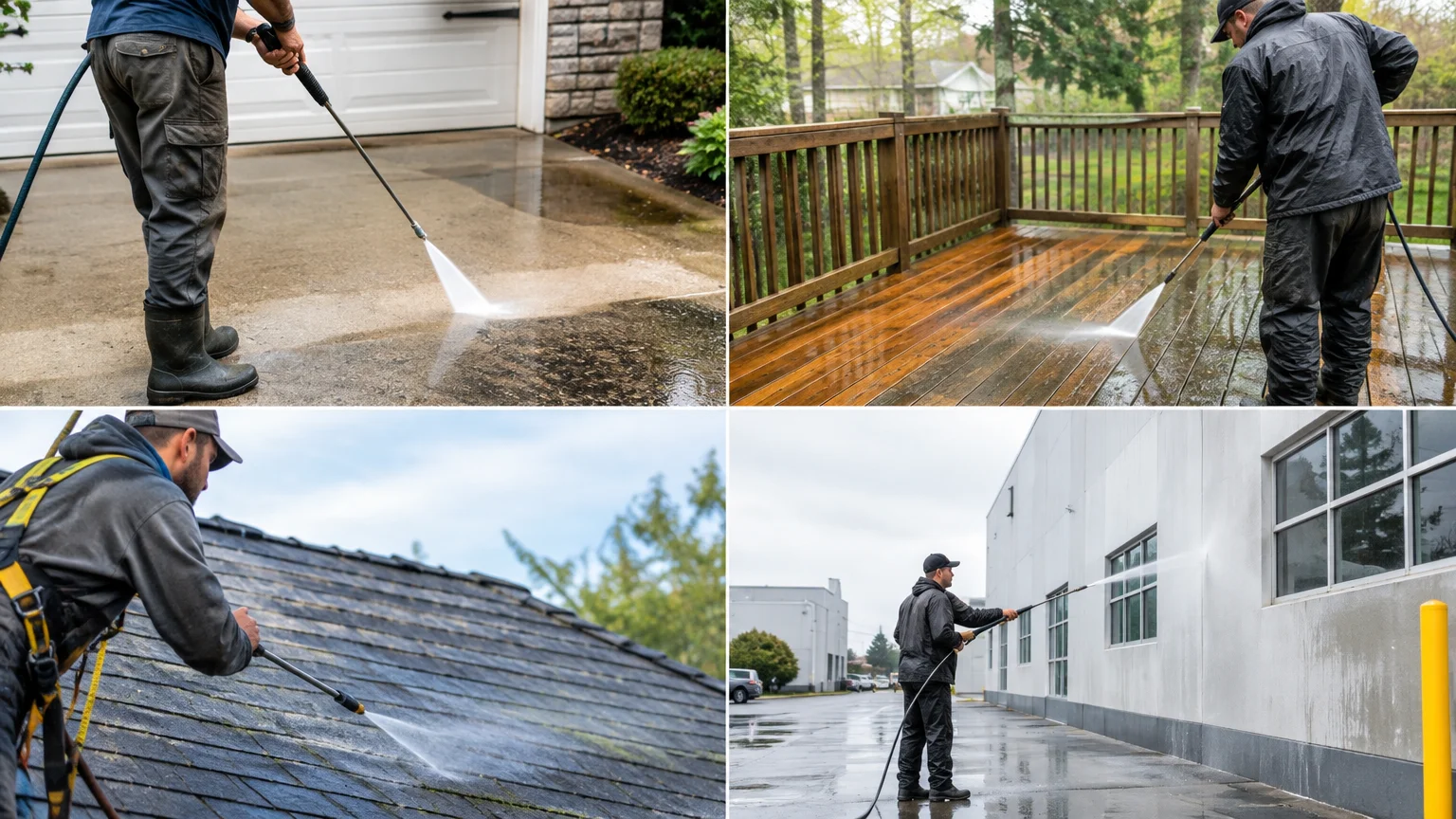
The method should match each exterior surface. Related work may include driveway cleaning, concrete cleaning, deck cleaning, or fence cleaning, but these materials need different care. Screens and glass still require a gentle method during the same visit.
Key takeaways for cleaner, smoother-operating windows
- Use soft tools. A brush, mild soap, and gentle rinse are usually enough.
- Remove screens with care. Do not pull on mesh or force stuck tabs.
- Keep pressure low. High pressure can stretch mesh and harm seals.
- Clean tracks while dry debris is loose. Vacuum before adding water.
- Check for damage. Tears and bent frames may need repair or replacement.
- Use the right order. Screens, tracks, frames, and glass each need a clear step.
Conclusion
Good window screen cleaning protects more than appearance. It helps keep airflow clear, supports smooth window movement, and removes dirt before it collects in seals and tracks. Homeowners can handle simple ground-level work when screens are sound. Larger, higher, or fragile systems need trained care.
Northlake Pressure Washing can help property owners in North Lake and nearby communities with screens, tracks, glass, and related exterior cleaning. Contact us to arrange window care that suits the property.
Frequently Asked Questions
Can I clean window screens while they are still installed?
A light vacuum may remove surface dust while a screen stays installed. Wet cleaning is safer after removal because water and dirt can enter the track. If the screen is high, stuck, or fragile, avoid forcing it.
What soap is best for window screens?
Mild dish soap mixed with water is suitable for many screen materials. Keep the mix light and rinse it away fully. Strong bleach, solvents, and abrasive cleaners may harm mesh, paint, seals, or frame finishes. Test a small area on older screens.
Why does my window still stick after cleaning the track?
Dirt may not be the only cause. A worn roller, bent track, damaged seal, or frame issue can also make a window stick. If gentle wiping does not help, have the window checked instead of forcing it. Too much force can damage the frame or glass.
Can a pressure washer clean screens safely?
A standard pressure washer is usually too strong for window screens. Its spray may stretch mesh, loosen spline, or drive water into tracks and seals. A soft brush and gentle rinse are safer. Exterior walls may need low-pressure care, but screens should be treated separately.
How do I know if a screen needs replacement?
Replacement may be needed when mesh has a large tear, the frame is badly bent, or the spline will not stay in place. Small loose areas may be repairable. Do not force a screen that no longer fits squarely into the window.
If you are not sure what you are dealing with, it is worth having someone look at it before it turns into a bigger job. Get in touch with Northlake Pressure Washing in North Lake today and we will tell you where you stand.