To learn how to pressure wash a deck safely, use low pressure, a wide 25° or 40° tip, and slow passes with the grain. Pre-wet the boards, let a deck cleaner loosen dirt, rinse well, and allow the wood to dry fully before staining or sealing.
Northlake Pressure Washing helps property owners in North Lake keep decks clean and ready to use. This guide explains each step in plain terms. It can help you work carefully or know what to ask a professional. It also explains when Deck Cleaning Services may be the better choice.
Table of Contents
- 1. Understand the basics and risks before you start
- 2. Inspect your deck: material, age, condition, and existing finish
- 3. Select the right tools, tips, and cleaners for the job
- 4. Prep the space for safety and results
- 5. Step-by-step washing technique that protects wood, stain, and sealant
- 6. Post-wash care: neutralize, dry, and plan finishing
- 7. Troubleshooting and long-term maintenance
- Frequently Asked Questions
- Key takeaways
- Conclusion
1. Understand the basics and risks before you start
Pressure washing uses strong water flow to lift dirt. Soft washing uses cleaner and light pressure to break down grime and growth. On many decks, soft washing steps should come first. A gentle rinse can then remove the loosened soil.
This two-part method helps protect wood fibers and surface finishes. PSI means pounds per square inch. It measures water force. GPM means gallons per minute. It measures water flow. More flow can rinse better without needing more force.
High PSI can cut grooves into wood, raise the grain, or remove soft spring wood. It can also leave stripes that stain will not hide. Composite boards can suffer too. Too much heat or force may roughen the top layer or leave wand marks.
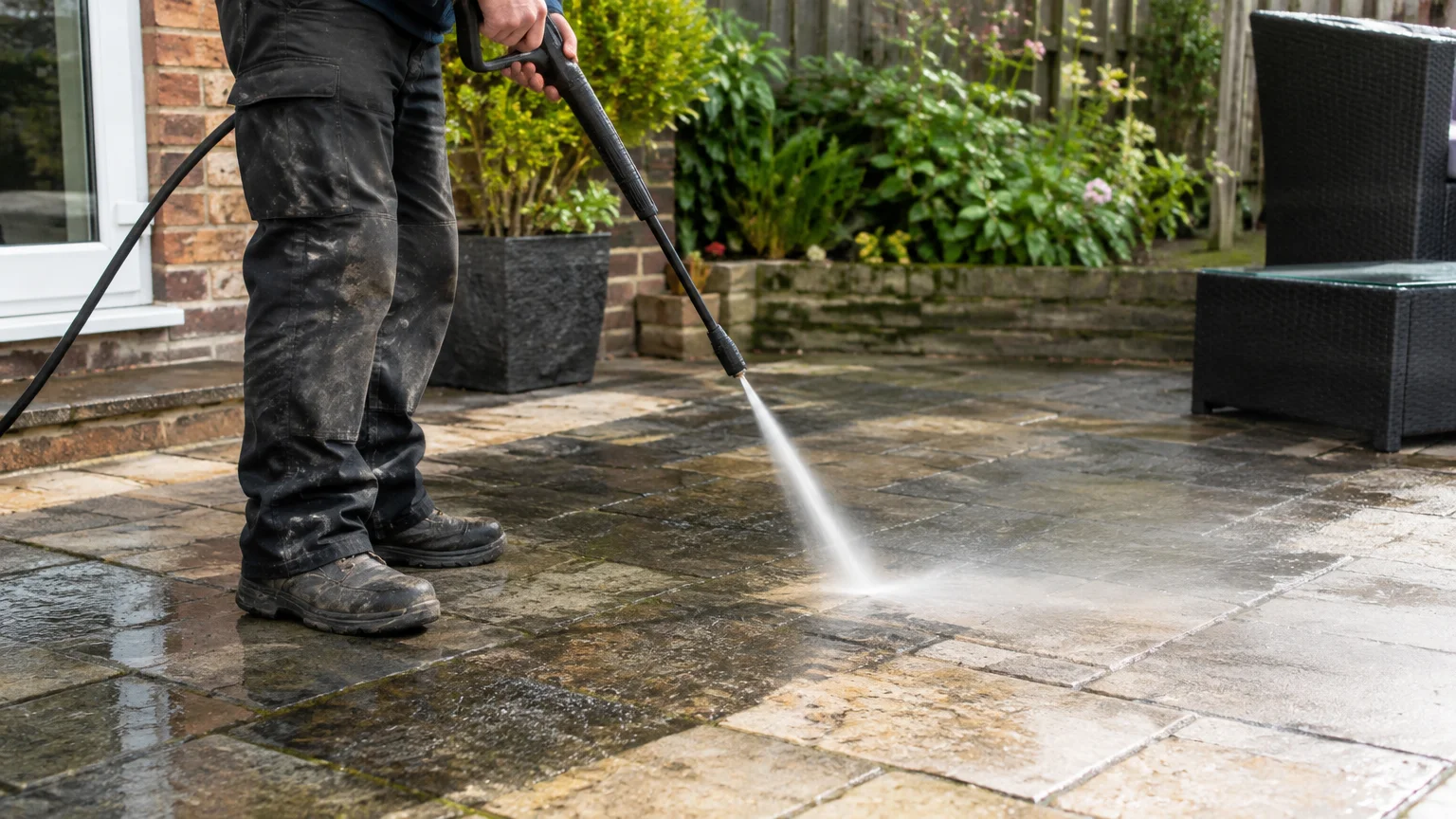
Use the lowest pressure that still cleans. Choose a wide spray tip to spread the water. Keep the wand at one steady distance. Your goal is to rinse away cleaner and dirt, not cut into the deck.
Work in the direction of the grain. Use long, smooth passes. Do not make tight circles. Keep people and pets away from the work area. Wear eye and hearing protection, and never point the spray at skin, feet, or hands.
Pressure washing vs. soft washing: what each method does
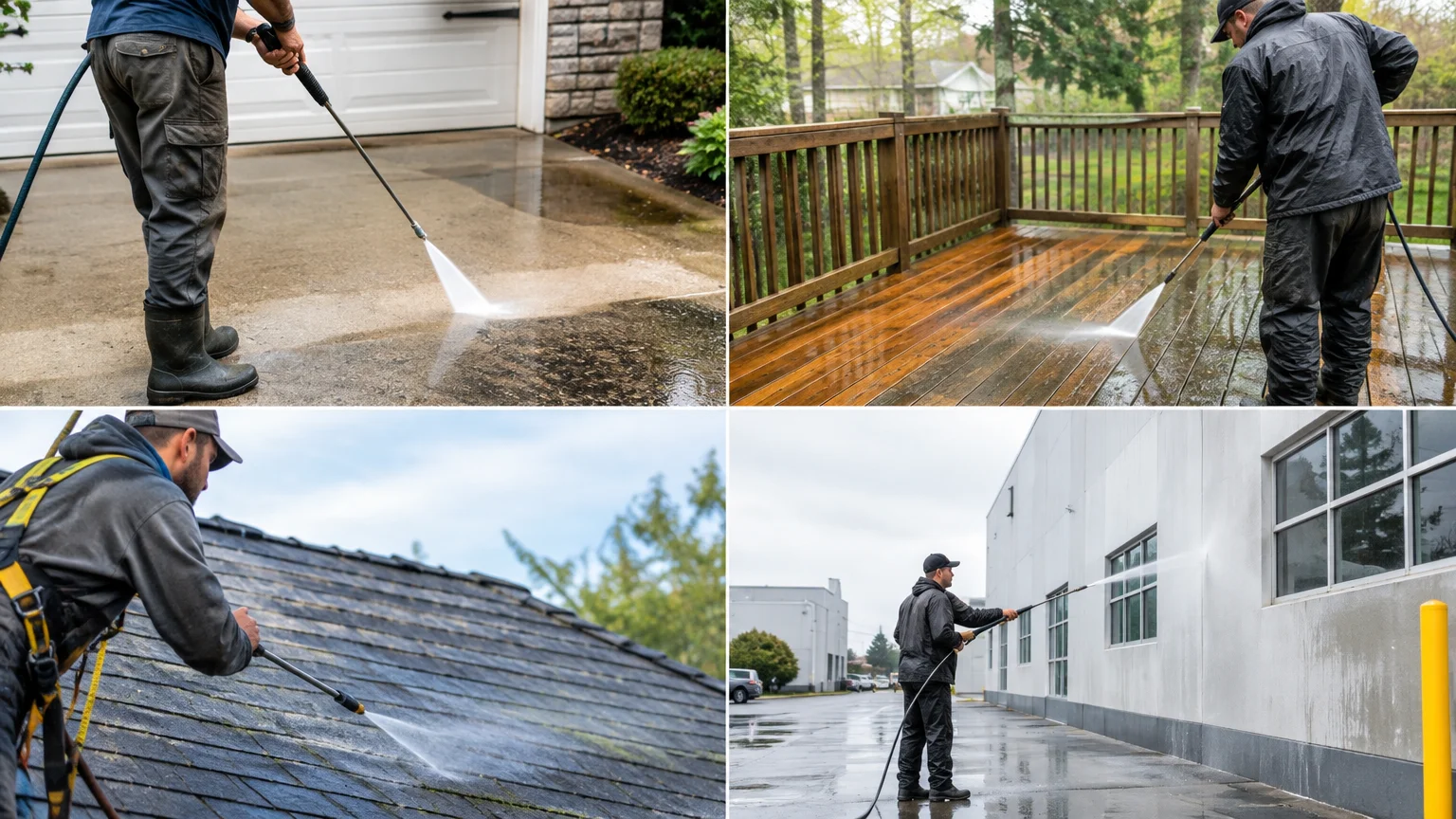
Soft washing gives the cleaner time to break down mildew and algae. It uses a gentle rinse afterward. Pressure washing adds more force for stuck dirt. Using both methods is often safer than trying to remove every mark with pressure alone.
Safe ranges for PSI, GPM, and nozzle angles on wood and composite
A higher GPM can help you rinse while using lower PSI. A 25° or 40° tip spreads the spray over a wider area. Keep the tip about 8–12 inches from the surface at first. Move farther away if the wood reacts badly.
Use an even wider, gentler spray on composite boards. Avoid hot water unless the product maker says it is safe. Test the setup before cleaning the full deck.
2. Inspect your deck: material, age, condition, and existing finish
Each deck needs a slightly different approach. Old cedar is soft. Pressure-treated pine is stronger but still has soft grain bands. Composite boards also differ by brand and top layer. A short inspection helps you choose a safe method.
Look below the stairs or railing for a label. It may list the wood type or composite brand. If you cannot identify the material, test an unseen area. Watch for raised fibers, color change, or surface marks.
Water that beads may show that a sealer still covers the boards. That finish can limit how much dirt comes loose. A failing finish may look patchy, chalky, or flaky. Cleaning removes dirt, but it cannot repair a damaged coating.
Check the fasteners before washing. Loose screws can make boards move and splinter. Reset popped nails when possible. Press a small tool into soft spots. If the wood crumbles, it has rot. Mark that area for repair instead of trying to clean it away.
On composite boards, look for deep scratches, melted spots, or shiny swirls. These signs call for very gentle care. Cleaning will not correct deep damage.
Identify wood species and composite types to set safe expectations
Cedar and redwood need light pressure and slow passes. Pressure-treated pine can handle somewhat more force, but it still needs care. Hardwoods such as ipe and merbau resist wear but may streak or become shiny.
Capped composite boards need cool water and wide tips. Uncapped composite boards may hold stains deeper. For those surfaces, the right cleaner often matters more than pressure.
Spot failing stain, sealant, rot, or fastener issues that affect cleaning
Peeling stain may need a stripper before washing. Gray wood may need a brightener after cleaning. Rusted fasteners can leave dark marks and may need a special cleaner. Fix loose boards and plan repairs before you begin.
3. Select the right tools, tips, and cleaners for the job
A pressure washer with steady water flow makes careful cleaning easier. Gas machines often have more GPM. Electric machines are quieter and work well for smaller decks. Use a good hose and a trigger that lets you control the spray.
A longer wand can help you keep the same angle and distance. Wide tips are safer for wood. A 25° tip works for many deck areas. A 40° tip is a better choice for railings, old boards, and delicate spots.
Do not use a pinpoint tip on wood. A rotary nozzle can also cause damage when handled poorly because it puts force into a small area. Surface cleaners may help on large, flat decks, but use one made for wood and keep it moving.
Deck-safe detergent can loosen dirt and light soil. A mildew or algae cleaner may help with growth when used as directed. A brightener with oxalic or citric acid may help gray wood after the main cleaning step.
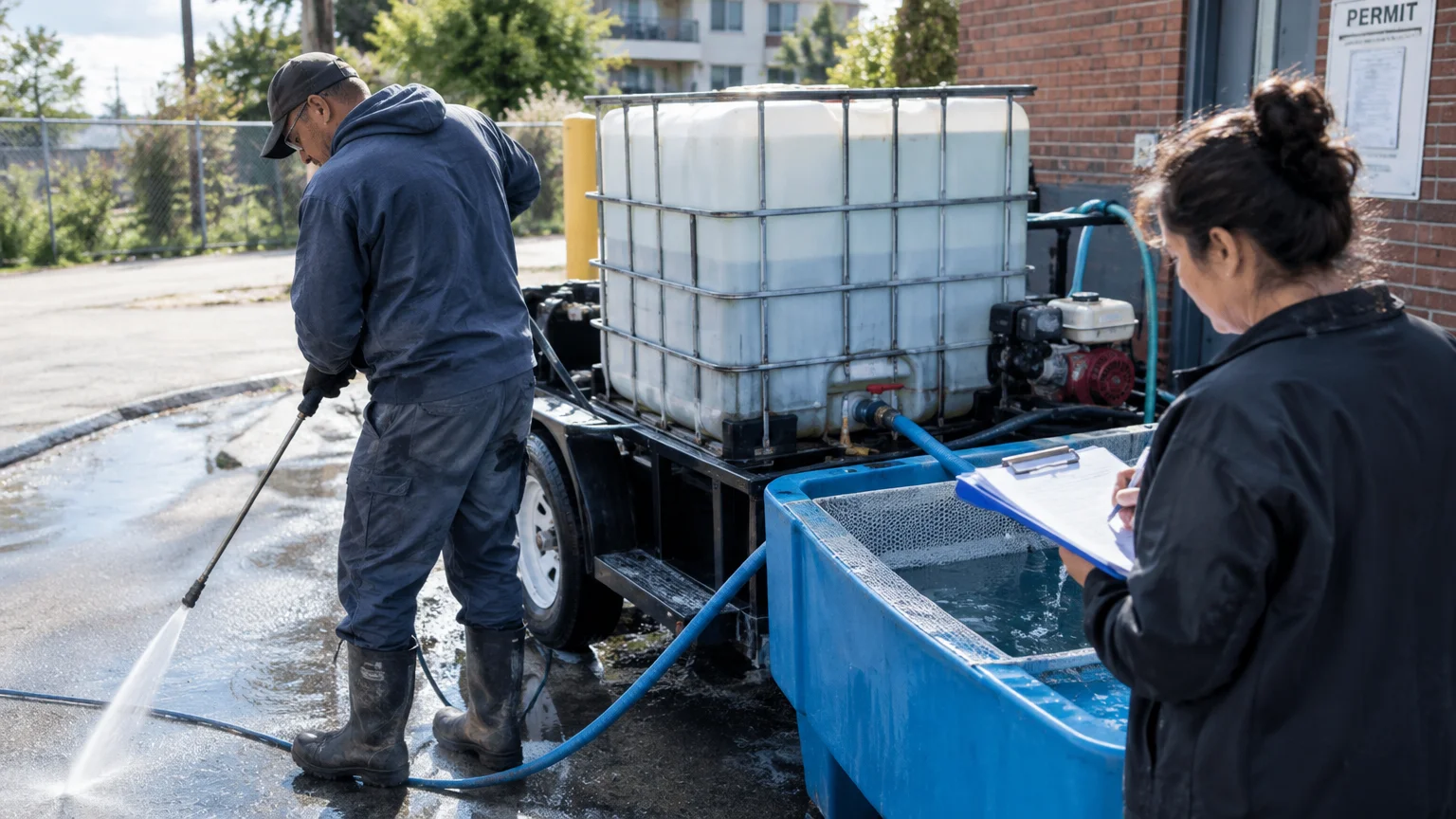
Read every label before use. Never mix cleaners. In particular, do not mix bleach-based products with acid brighteners or ammonia. Such mixtures may release toxic gas. Rinse well between products, and keep runoff away from storm drains when possible.
Rinse nearby plants before and after using cleaner. This reduces the chance of leaf damage.
Pressure washer setup, nozzles, surface cleaners, and accessories
Set the machine on level ground. Make sure the hose has good water flow. Bleed air from the line before starting. Keep spare O-rings and a tip-cleaning tool nearby.
Use eye, glove, and hearing protection. For longer work sessions, review NIOSH guidance on noise safety. A short wand or angled tool can help with stair risers and tight spaces.
Detergents, mildew removers, and brighteners—when and how to use them
Apply detergent from the bottom up to help prevent streaks. Let it sit for the time listed on the label. Do not let it dry on the deck. Rinse from the top down.
Use a brightener only after the main cleaner has been rinsed away. Rinse the brightener well. A clean, dry, balanced surface gives stain a better base.
4. Prep the space for safety and results
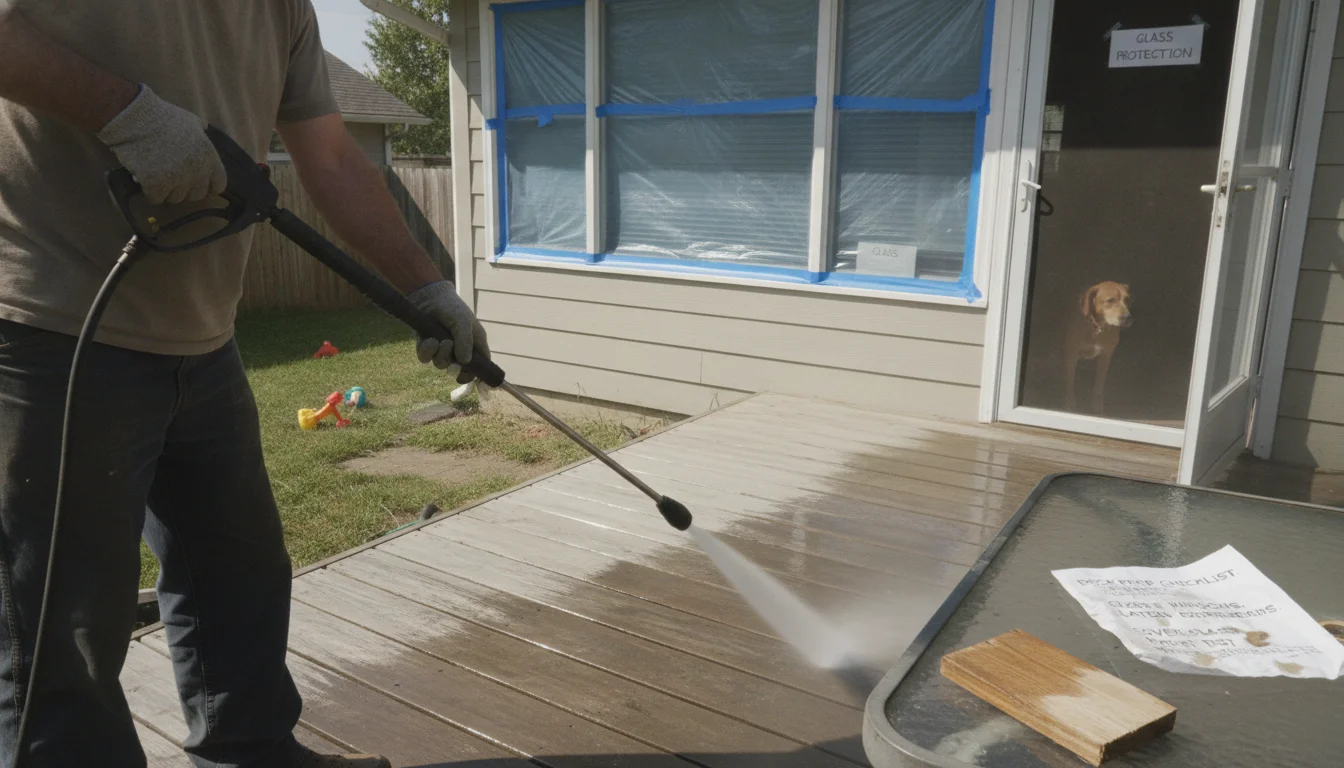
Move furniture, planters, grills, toys, and tools away from the deck. Cover outlets and fixtures. Check that outdoor GFCI outlets trip and reset. If the deck meets a doorway, protect the threshold with plastic.
Cover nearby plants with breathable fabric when needed. Do not trap heat under plastic in strong sun. Pre-wet shrubs with clean water so they absorb less cleaner. Close windows and keep pets indoors during the job.
Sweep leaves and loose dirt from the boards and gaps. Remove mats and set them aside to dry. Clear debris from board gaps with a plastic scraper if needed. Open gaps help water and soil move away.
Make a small test area in a hidden corner or on a step. Start with low pressure and a wide tip. Watch the wood after one pass. If fibers rise or lines appear, lower the pressure and rely more on cleaner.
Pre-wet the entire deck with clean water. This helps stop cleaner from soaking in too fast. It also helps the cleaner work more evenly. Wet the railings and posts as well as the floor boards.
Protect landscaping, furniture, outlets, and nearby surfaces
Shield delicate plants and move loose items away from spray. Mask nearby glass if hard water spots may form. Close windows and make sure doors latch. Keep furniture far enough away to avoid dirty splashback.
Patch test, set pressure, and pre-wet strategy to prevent spotting
A test area shows how the surface reacts. Pre-wetting helps even out absorption. Clean small sections so the detergent stays wet. This helps prevent lap lines where one area dries before the next.
5. Step-by-step washing technique that protects wood, stain, and sealant
These steps explain how to pressure wash a deck while protecting wood, stain, and sealant. Plan your work before you start. Choose an exit path so you do not walk across wet, soapy boards.
Hold the wand with both hands. Keep a steady stance. Work with the grain and use smooth strokes. Feather each pass into the next area so no hard lines form.
- Apply deck cleaner evenly across one section.
- Let it dwell as the label directs, keeping it wet.
- Rinse with a wide-angle tip and low pressure.
- Wash the boards with the grain and even overlap.
- Rinse rails, posts, and stairs from top to bottom.
- Give the entire deck and nearby surfaces a final rinse.
Overlap each spray pass by about one-third of its width. This helps prevent missed strips and zebra lines. Start moving the wand before pulling the trigger. Keep moving after releasing it. This avoids start-and-stop marks.
If the deck has a finish you want to keep, use only enough pressure to rinse it. Do not make aggressive passes that strip sound stain. Watch the runoff and guide dirty water away from flower beds.
Lift mats so water can escape. Rinse splashes from siding at once. If suds collect, pause and flush the area with clean water.
Maintain distance, angle, and feathering with the grain
Hold the tip about 8–12 inches above the wood. Aim the spray about 10–20 degrees away from the surface. Feather each stroke into the dry area. Long strokes usually leave a more even finish than short chops.
Rinse patterns, overlap control, and runoff management
Rinse rails and posts from top to bottom. Rinse floor boards with the grain and in full board lengths when possible. Keep the same overlap throughout the job. Watch where water flows and guide it toward a safe drainage area.
6. Post-wash care: neutralize, dry, and plan finishing
Alkaline cleaners can raise the wood’s pH. A high pH may keep stain from bonding well. A wood brightener with oxalic or citric acid can bring the surface closer to neutral. It may also reduce tan and rust marks.
Apply brightener as the label directs. Keep it wet during the stated dwell time. Rinse it away fully. Do not apply another product until the first one is gone.
Let the deck dry before staining or sealing. Sun and moving air help. Shade and cool weather slow drying. Rushing can trap moisture below the finish and lead to cloudy spots or early wear.
Many professionals use a moisture meter before applying a coating. If you do not have one, waiting longer is safer than coating too soon. Cleaning may raise small wood fibers. Light sanding with fine grit can smooth them.
Use a pole sander where possible. Remove dust before applying finish. A clear sealer keeps the natural wood tone but needs regular care. A semi-transparent stain adds color while showing grain. A solid stain covers more flaws and looks more like paint.
Choose a product that suits the sun and weather in Wisconsin. Follow the product label for surface preparation and drying time.
pH balancing and brightening for wood after alkaline cleaners
Brightener helps restore color and balance the surface after an alkaline cleaner. Apply it with a pump sprayer after the main rinse. Keep it wet during the dwell period. Rinse well before the deck dries.
Dry time, moisture testing, sanding, and timing for stain or sealer
Drying time changes with shade, sun, wind, and humidity. Allow extra time during cool or damp weather. Sand lightly if the grain feels rough. Remove dust, then apply stain or sealer only in steady, mild weather.
7. Troubleshooting and long-term maintenance
Careful washing may still reveal a few marks. Tiger striping means light and dark bands. Fuzzing means tiny wood fibers stand up. Let the deck dry, then blend the area with gentle passes or light sanding.
Lap marks appear when one section dries while the next stays wet. Work in smaller areas and keep the edge damp. If a finished deck has uneven color, the area may need light sanding and another coat.
Etching looks like grooves or rough patches caused by too much force. Stop when you see it. Lower the pressure and use a wider tip. Severe damage may require board replacement.
Sweep leaves often and rinse spills soon. A light seasonal wash can keep dirt from settling deep. In shady areas, treat mildew early with a mild cleaner. Consider Pool Deck Cleaning in North Lake, WI when an outdoor pool area needs careful cleaning.
Businesses with outdoor seating can use Commercial Pressure Washing in North Lake, WI to keep walkways and customer areas clean. Homeowners can also plan routine deck cleaning before dirt and growth become harder to remove.
Fixing lap marks, fuzzing, tiger striping, and etching
Use gentle overlap passes to blend stripes. Let the wood dry before sanding fuzz. Lower PSI and widen the tip before making another pass. Replace boards when deep grooves remain.
Seasonal cleaning schedule and preventative tips to keep decks cleaner longer
Plan a light rinse in spring and fall. Trim plants away from rails to improve airflow. Lift door mats often so damp debris does not stay beneath them. Keep gutters clear so roof water does not stain the first deck boards.
Frequently Asked Questions
What nozzle is safest for cleaning a wood deck?
A wide-angle 25° or 40° tip is usually the safest starting choice. It spreads water over a larger area. Begin with a 40° tip on railings and older boards. Test a hidden spot before cleaning more surface.
If you are learning how to pressure wash a deck, begin with the gentlest setup. Increase force only when the cleaner and light rinse do not remove the soil.
Can pressure washing remove old deck stain?
Light washing will not remove a sound solid finish. It may lift loose or peeling stain. Removing old stain usually calls for a product made for that coating, followed by rinsing and brightening.
Let the wood dry before sanding or applying a new finish. Do not use high pressure as a substitute for proper stain removal.
How long should a deck dry before staining?
Drying depends on sun, shade, airflow, and weather. Cool or damp conditions need more time. A moisture meter can help show when the wood is ready.
When unsure, wait longer. Lightly sand raised fibers and remove dust before applying stain or sealer.
Is soft washing better for composite decking?
Soft washing is often a safer choice for composite boards. The cleaner breaks down grime, and a low-pressure rinse removes it. Avoid hot water or narrow tips unless the maker allows them.
Always test a small hidden area first. Different composite products can react in different ways.
How do I choose a deck cleaning service?
Look for a local team with clear methods and good reviews. Ask what cleaner they use and how they protect plants, windows, and siding. Ask whether they test an unseen area before washing the full deck.
You can also ask how they prevent etching, lap marks, and damage to stain or sealant. A careful provider should explain the process before work begins.
Key takeaways
- Start gently: Use a wide tip, low PSI, steady distance, and smooth passes.
- Use cleaner first: Let the detergent loosen dirt before rinsing.
- Protect the surface: Pre-wet the deck, work with the grain, and test first.
- Allow proper drying: Brighten when needed, let the wood dry, and sand light fuzz.
- Maintain the deck: Seasonal rinses make future cleaning easier and safer.
Conclusion
A careful plan helps keep a deck clean without harming wood, stain, or sealant. Northlake Pressure Washing helps property owners in North Lake use safe methods for outdoor surfaces. Its deck cleaning team can help when the job is too large, the finish is delicate, or the material is hard to identify.
Northlake Pressure Washing serves North Lake and nearby communities, including Pine Lake, Hartland, Merton, Chenequa, and Delafield. A maintenance plan can help keep patios, walkways, fences, and decks in good shape. Read more about About Our Pressure Washing Team, then Contact us to discuss your deck cleaning needs.
If you are not sure what you are dealing with, it is worth having someone look at it before it turns into a bigger job. Get in touch with Northlake Pressure Washing in North Lake today and we will tell you where you stand.